
Initialize App
Documentation // Interaction Design

The Architecture
of Agency

In high-performance gaming applications, interaction is more than a button press—it is a closed-loop conversation between the user's intent and the system's response. This guide deconstructs the patterns that transform static UI into living mechanics.

The Feedback Cycle

A game’s core loop is a recursive sequence: Action → Simulation → Feedback. Whether it is the 16ms response of a frame-perfect parry or the 48-hour cycle of a grand strategy maneuver, the psychological weight of the interaction rests on the clarity of this loop.

When we talk about "juice" in design, we refer to the saturation of feedback. A simple click in a farming simulator shouldn't just register data; it should trigger a visual arc of soil, a tactile haptic pulse, and a harmonic audio cue. This transforms a mundane database entry into a visceral achievement.

METHOD_NOTE_01

Evaluating Robustness

Robustness is measured by "Input-to-Photon" latency and the consistency of the feedback interval. We evaluate the limit by saturating the UI with simultaneous triggers to detect frame-pacing variance during high-intensity particle events.

Core Loop Architecture
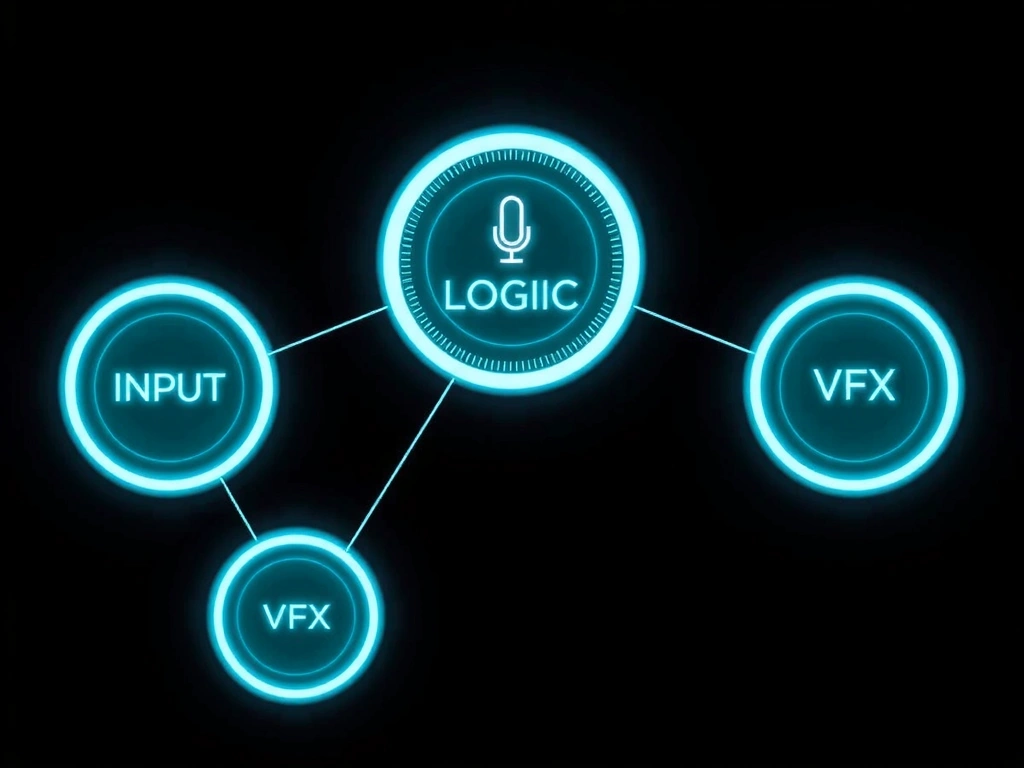
TRG_LATENCY: 4.2ms
VFX_BUFFER: SHAKERS_02

FIG 1.1: Convergent Feedback Convergence in High-Frequency Simulations

Interaction Design is the logic of consequence — meaningful choices require visible costs — agency is an illusion without consistent feedback loops Interaction Design is the logic of consequence — meaningful choices require visible costs — agency is an illusion without consistent feedback loops

Designing for the Fail State

How interaction patterns bridge the gap between player frustration and mechanical mastery.

CRITICAL_ERRORS
  • Input Buffering Gaps

    Failing to buffer inputs during recovery animations leads to "sticky" feeling controls in high-APM scenarios.

  • Non-Diegetic Overload

    Placing critical HP data outside the player's foveal vision during combat increases cognitive fatigue.

  • Feedback Lag

    A 200ms delay in hit confirmation transforms a tactile combat system into a sluggish encounter.

Tactile Interaction

Haptic Narratives

Synchronizing rumble patterns with on-screen physics (e.g., road grit in racing games) creates a secondary data stream for the player subconsciously.

Trade-off Frame

Immediate Response High Battery / Heat
Diegetic UI Reduced Visibility
Input Masking Complexity Spike
Decision Strategy: Optimize for Input Stability on mobile devices at the sacrifice of Resolution.
OBSERVATION_RUN
"The most effective UI is the one the player stops seeing, because they have started feeling it."
— Chief Architect, Uplixo Ops
!

The "Risk of Agency" Theorem

Universal design patterns often fail by prioritizing accessibility over friction. In gaming, friction is the source of narrative weight. If your interaction design makes navigation too effortless, you risk stripping the player of their struggle—the primary driver of long-term retention. Use "convenience" sparingly.

DEEP_DIVE: FLOW_STATE

Mastering User Flow Through Escalating Complexity

The concept of 'Flow State' in rhythmic or action-heavy gaming applications is not accidental. It is the result of architectural pacing—what we term 'The Ladder'. Interaction design must introduce mechanics in isolation before requiring their synthesis under pressure.
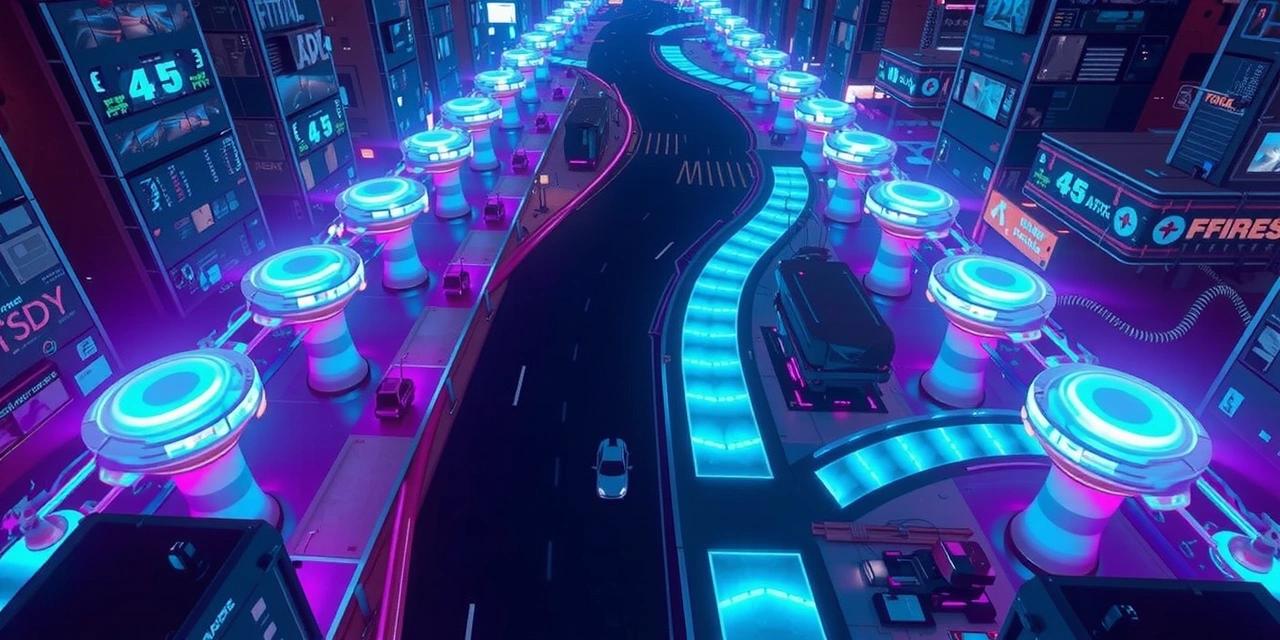
Environmental Architecture 003 // Environmental Cues as Navigational Signage

Consider the interaction between movement and terrain. In elite design, players aren't told where to go; they are lured by light, texture, and implied momentum. This 'environmental storytelling' reduces the need for immersion-breaking HUD elements, allowing the game world itself to act as the interface.

Immediate Feedback

Visual arcs, landing dust, and instant audio pulses. Used in platformers and shooters to validate the precision of a split-second action.

Delayed Feedback

Resource investment, territory growth, and narrative consequence. Used in 4X strategy games to reward systemic thinking over reflexes.

"At Uplixo, we view the UI not as a layer on top of the game, but as the central nervous system that connects human intuition to binary execution."

Ultimately, designers must balance the 'illusion of choice' with narrative cohesion. While players desire agency, a designer's role is to ensure that even divergent paths feel intentionally crafted. This is the fine line we walk: giving the player the steering wheel, while we build the road in real-time under their tires.

Optimizing Interaction Models

LENS_A: COMPETITIVE

Precision & Latency

Designed for eSports environments where every micro-second of input lag results in a fail state. Minimal visual 'clutter' is prioritized over aesthetic 'flair'.

Optimizes for:

Input Frame Stability, Visual Clarity, Response Fidelity

Sacrifices:

Cinematic Immersion, Particle Density, Ease of Entry

LENS_B: NARRATIVE

Immersion & Resonance

Designed for open-world and RPG experiences. The UI is woven into the lore (Diegetic) and the focus is on emotional weight rather than mechanical snap.

Optimizes for:

Atmospheric Density, Diegetic Cohesion, Emotional Impact

Sacrifices:

Information Speed, Competitive Fairness, HUD Reliability

Ready to build the
next generation of play?

Our architectural patterns are ready for deployment. Connect with our engineering team to audit your current interaction model.